
Technologies
Surfaces, thread and connection designs, prosthetic concepts and the digital workflow — described only as far as the product documents describe them, and always with the models they apply to.
- SRA surface
- Hybrid design
- Self-cutting thread
- Structure without micro-threads
- Conical connection with hexagonal index and platform switching
- 11° morse-tapered internal hex — single platform
- 1.5° locking conical connection
- Sloping shoulder
- i-mimetic surface
- RBM surface
- One-piece body and bicortical anchorage
- Bendable neck
- Immediate protocols
- Digital workflow
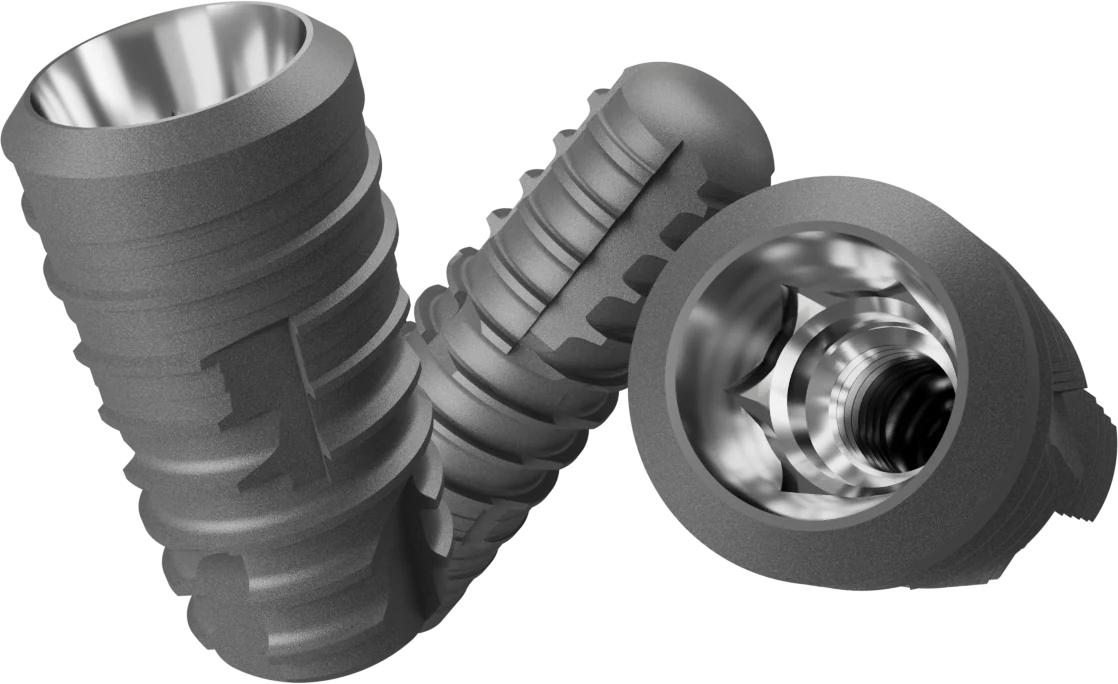
SRA surface
Sandblasted, then double acid-etched.
After sandblasting, the implant surface is etched with a double acid-etching technique. The result is a homogeneous roughness that mimics the bone morphology; the brochure documents the surface with 3D area parameters (ISO 25178) measured on the thread flank and valley.
Scope: Documented for the Implant Swiss Bone Level, Tissue Level and Short fixtures. PACE, Zygoma, i-LiNQ, i-System and Monoimplant describe their surfaces separately.
Found in
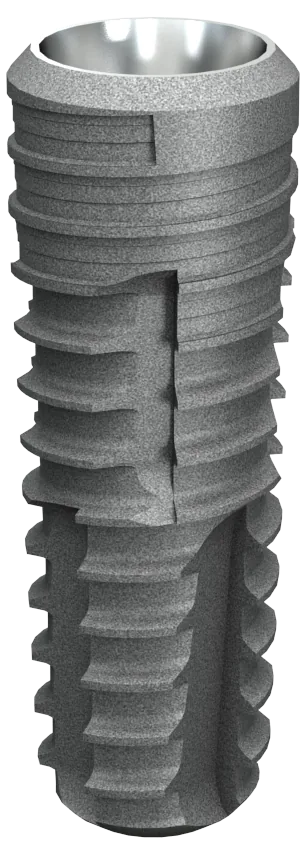
Hybrid design
Straight neck, tapered apex.
The top 3 mm of the implant is cylindrical, the remaining apical portion tapered. The straight portion exerts minimal stress on the crestal cortical bone; the tapered portion eases insertion at the osteotomy site. The Narrow Ø2.9 fixture uses its own hybrid body with threads deepening towards the apex.
Found in
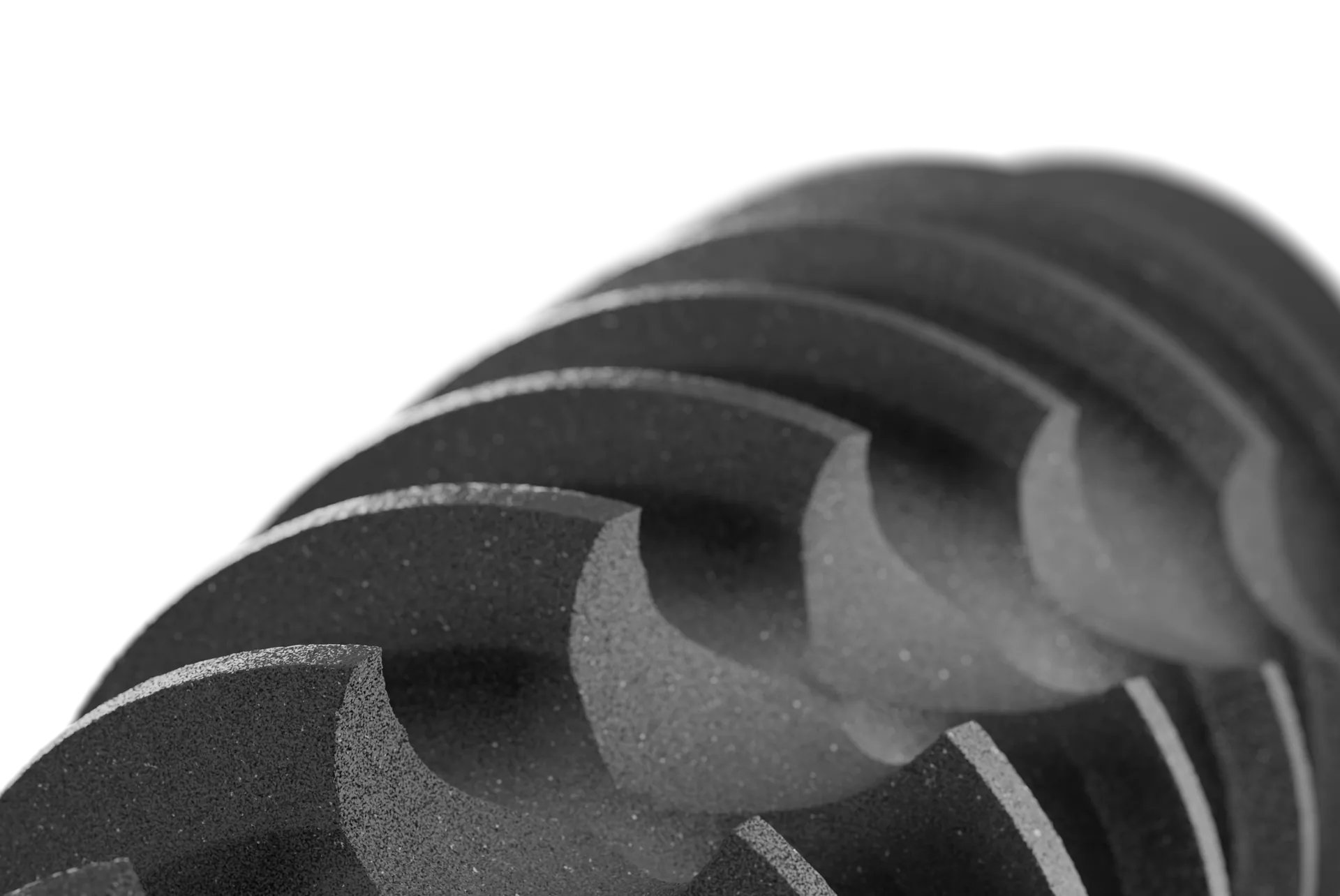
Self-cutting thread
Primary stability without transferring stress to the bone.
Implant Swiss fixtures use a semi-aggressive thread with cutting edges that guides itself into the bone. PACE adds two-directional self-cutting edges and a progressively deepening thread aimed at strong primary stability during insertion.
Found in
Structure without micro-threads
No micro-threads at the cervical area.
Harmful pathogens can colonise micro-threads at the cervical area of some implant designs. The absence of micro-threads on Implant Swiss Bone Level and Tissue Level fixtures makes hygiene and plaque control easier around the neck. This is a model-specific feature: Monoimplant's Microthread type, for example, deliberately carries cervical micro-threads to support extraction-socket walls.
Scope: Not a property of the Narrow Ø2.9 fixture (passive thread neck), PACE (sloping shoulder), i-System, i-LiNQ or Monoimplant.
Found in
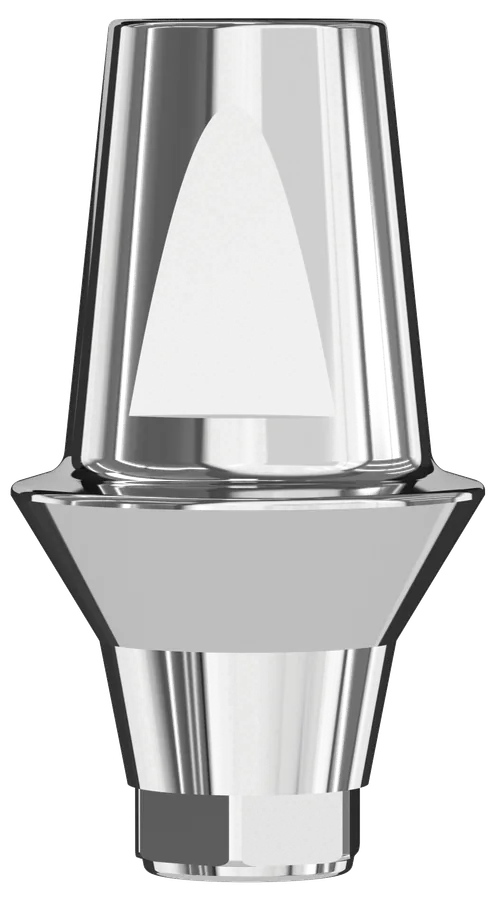
Conical connection with hexagonal index and platform switching
Sealed interface, all abutments on all diameters.
The universal conical connection with hexagonal index forms a firm implant–abutment interface that prevents micro-gap and micro-leakage. Platform switching moves the interface away from the alveolar bone to maintain the crestal bone. On the Bone Level platform every abutment fits every fixture diameter except Ø3.3 (Mini platform).
Found in
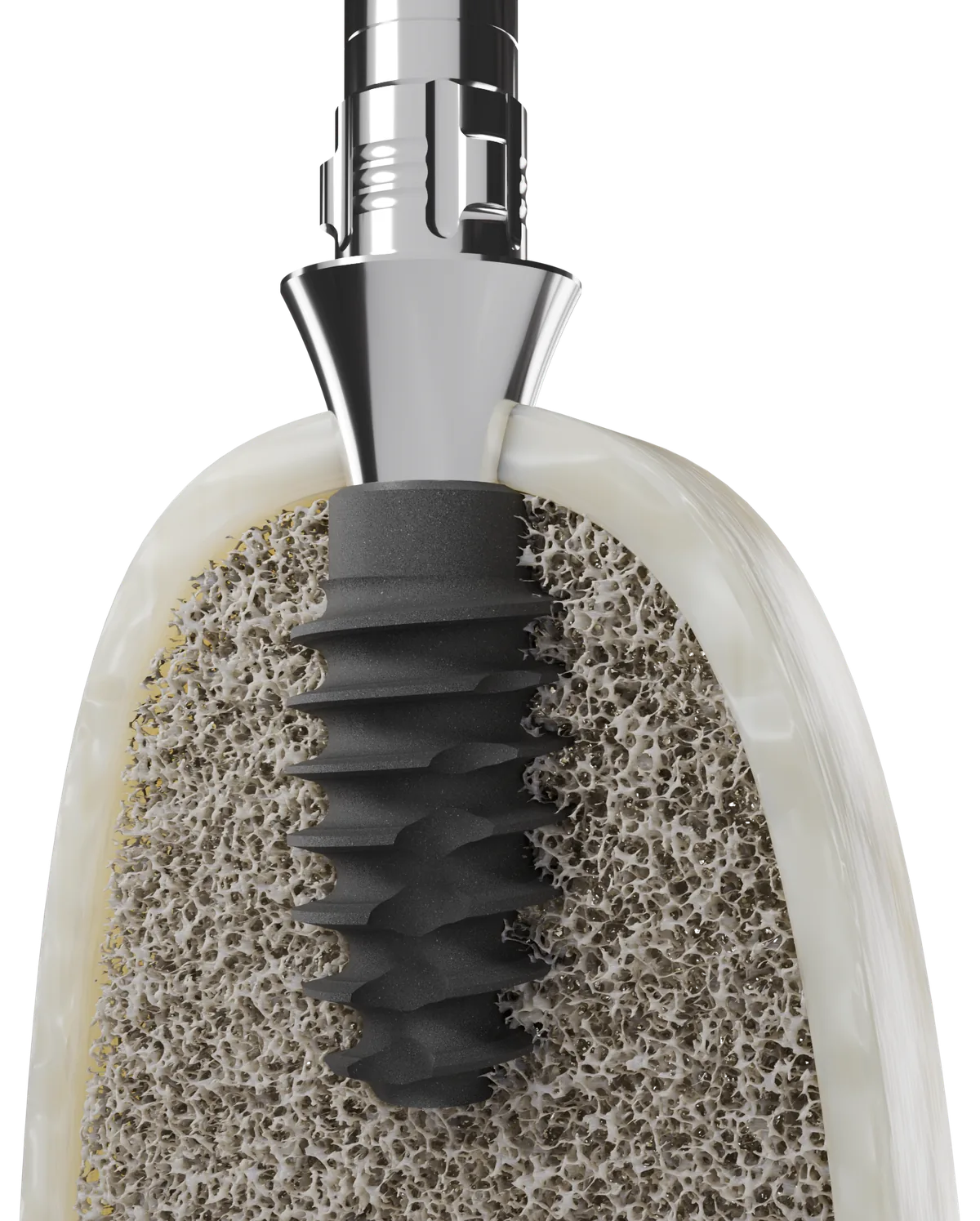
11° morse-tapered internal hex — single platform
One prosthetic platform across all PACE diameters.
PACE uses an 11° morse-tapered internal hexagonal connection (hex Ø2.1) that provides precise fit, mechanical stability and bacterial seal integrity. One platform across all implant diameters simplifies component selection and enhances restorative flexibility.
Found in
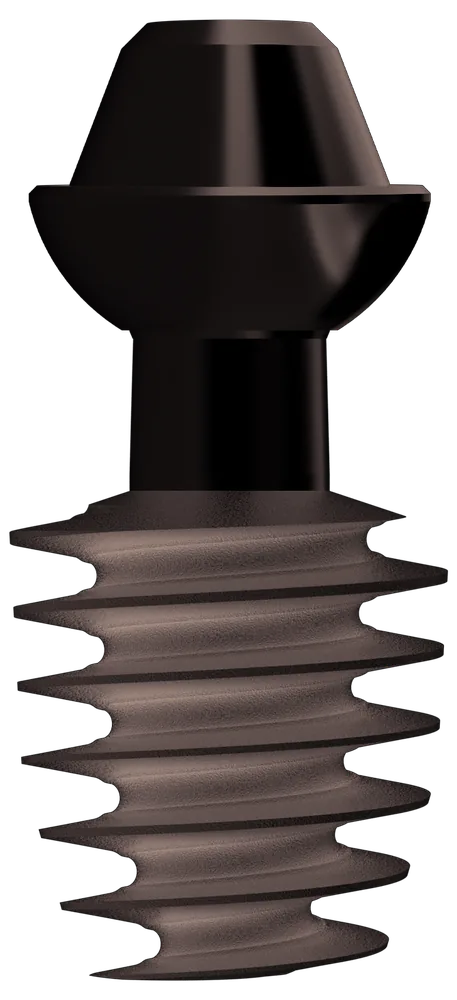
1.5° locking conical connection
Cold welding instead of an abutment screw.
i-System abutments are friction-fitted into the implant well: the 1.5° conical taper forms a “cold-weld” connection that works without an abutment screw and is designed to prevent micromovement and microleakage. The i-LiNQ® component uses the same locking-taper principle on the i-LiNQ® implant, and the Implant Swiss Zygoma fixture has a 1.5° index-free conical internal connection with a 3 mm depth.
Found in
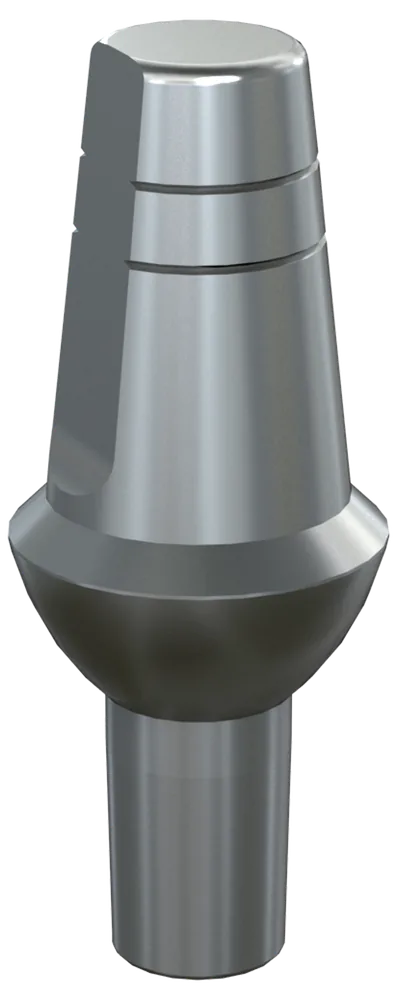
Sloping shoulder
Space for hard and soft tissue at the crest.
The sloping shoulder of the i-System implant provides space for hard and soft tissue even where tissue volume is limited, and makes placement close to a tooth or another implant safer. The i-LiNQ® implant's shoulder follows the transversal bone profile for crestal bone support; PACE combines a sloping shoulder with a narrow neck for crestal bone preservation.
Found in
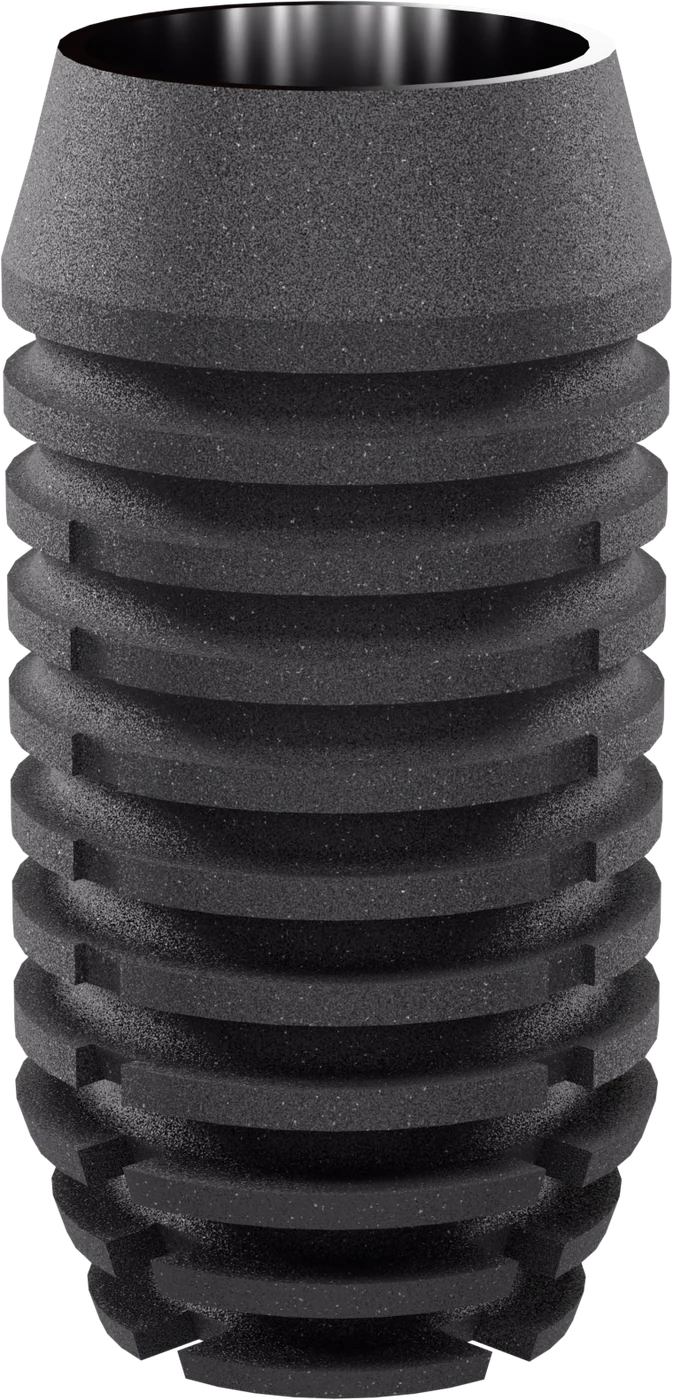
i-mimetic surface
Surface structure in harmony with the fin-type macro design.
The i-mimetic surface of i-System implants is described as the structure for osseointegration, increased cell attachment and enhanced bone quality, in harmony with the micro and macro design — square-edged fins, inter-fin distance, anti-rotational channels and incrementally deepening grooves.
Found in

RBM surface
Resorbable blast media with calcium phosphate.
Monoimplant Rough, Rough B, MOT, Multiunit and Oring implants are blasted with calcium phosphate, a resorbable and biocompatible medium, and pass through cleaning stages before and after the treatment. Smooth and Microthread implants keep a polished surface by design.
Scope: Not applied to Monoimplant Smooth and Microthread implants.
Found in
One-piece body and bicortical anchorage
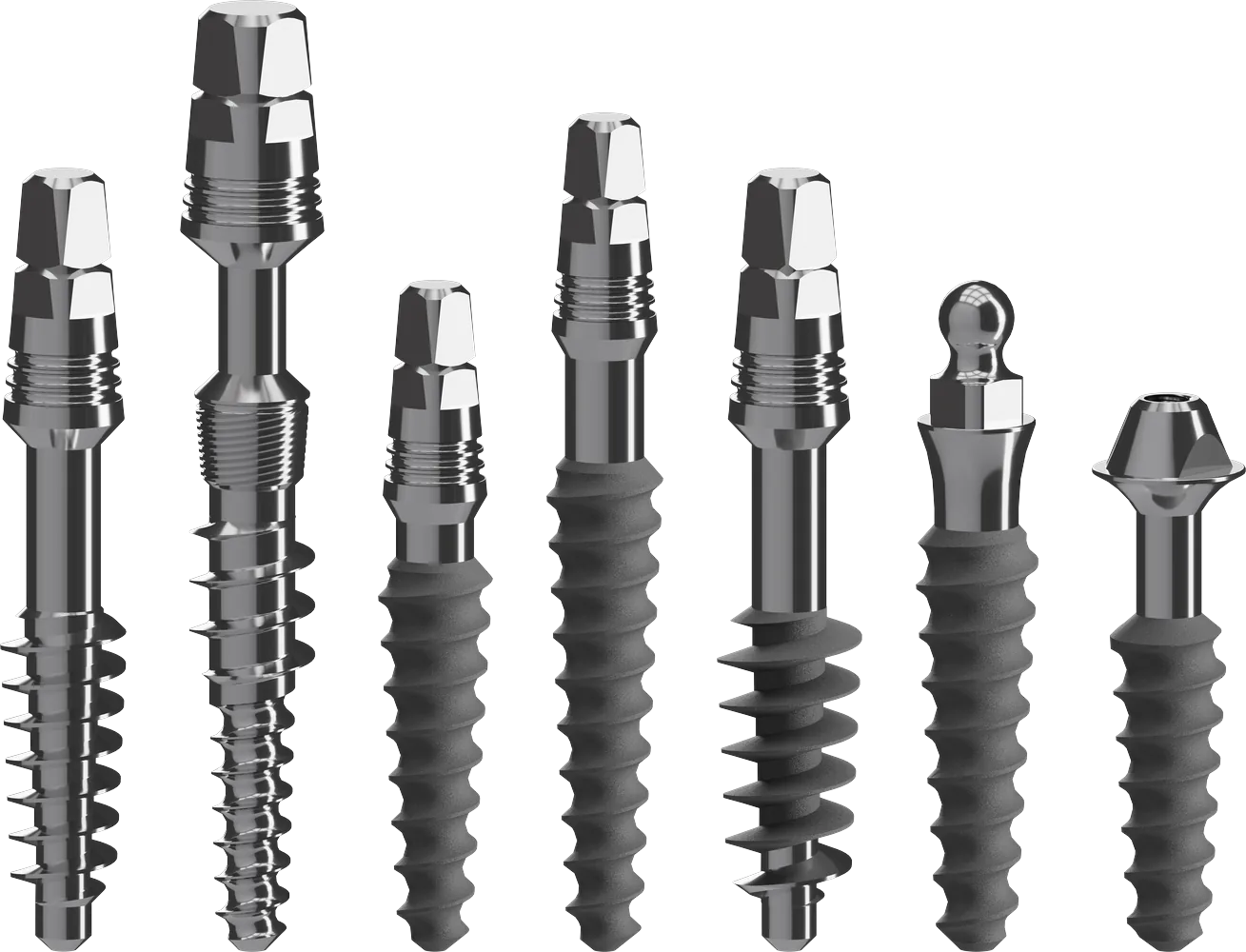
Fixture and abutment in one monolithic body.
Monoimplants are fixated between both cortical plates of the jaw — entry and exit point — for primary stability that does not rely on trabecular bone. Because fixture and abutment are one piece, there is no abutment screw to loosen or fracture and the implant occupies less space than a two-piece design.
Found in
Bendable neck
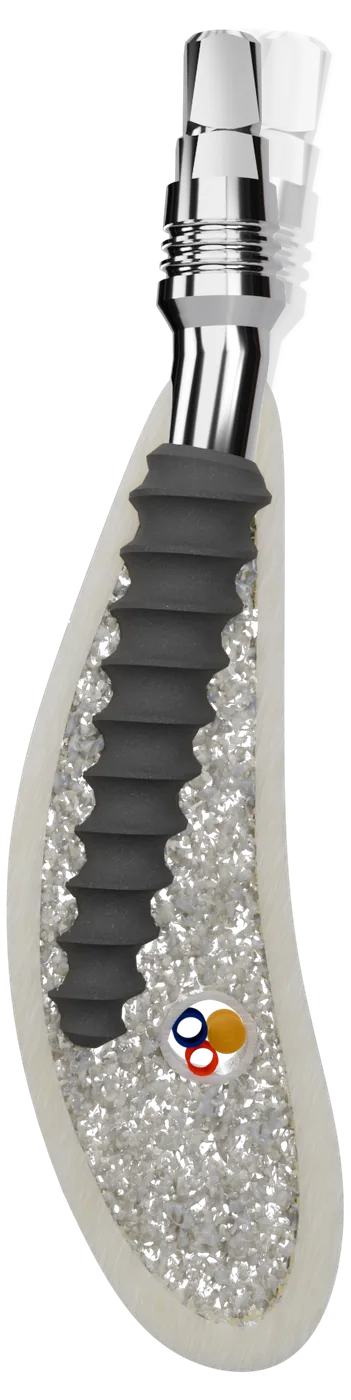
Parallelism established after placement.
Rough B implants, and the long-neck Microthread implants, can be bent to establish parallelism between implants. Rough B is placed after pre-drilling and bone expansion with the congruent bone-expanding screw; the safety head has a predetermined breaking point and dual square (patent pending). Maximum insertion torque 45 Ncm; intended for bridges in the reduced-load range.
Scope: Only the long neck of the Microthread type is bendable.
Found in
Immediate protocols
Where the documents describe immediate placement or loading.
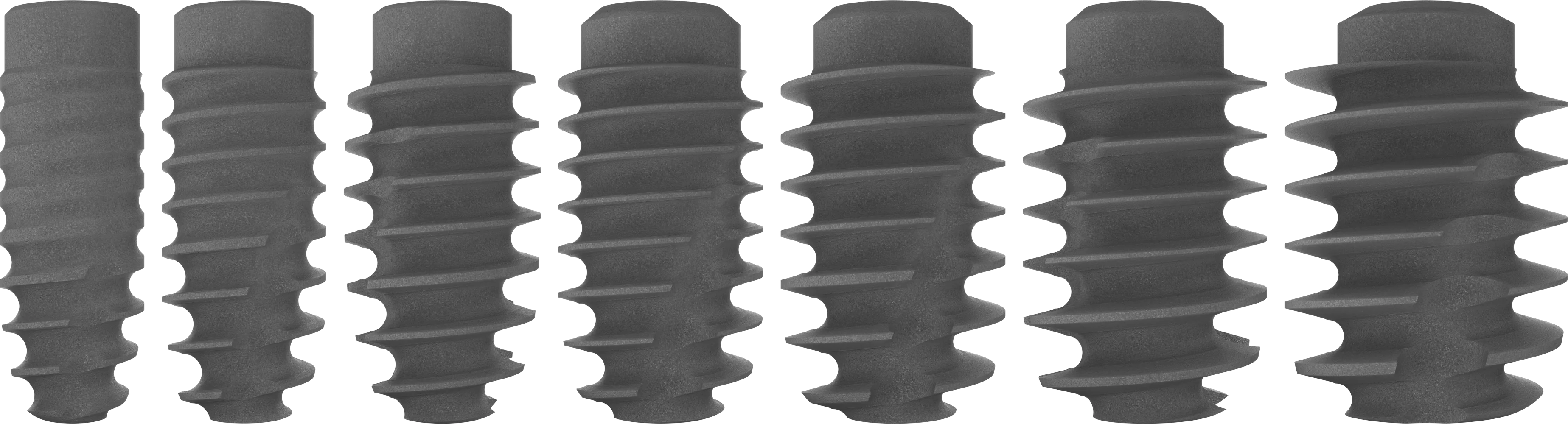
PACE is described as engineered for immediate placement and loading; the Monoimplant System is designed for immediate loading subject to adequate primary stability and clinical assessment; Implant Swiss Zygoma implants address patients who want to benefit from immediate-loading protocols; and the i-LiNQ® implant can be immediately loaded in appropriate cases. In every case the decision depends on primary stability and the clinical situation.
Found in
Digital workflow
Scan bodies, premills, digital analogs, Ti-Bases and libraries.
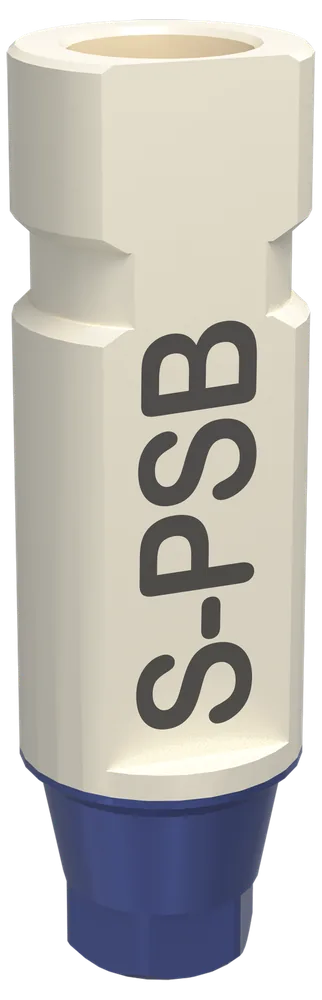
Each system carries its own digital components: Implant Swiss scan bodies, premills (Ø10 / 14 / 16), digital analogs, Ti-Base and Zr-base abutments for the Bone Level, Tissue Level, Multi-Unit and Octa platforms; PACE Ti-Base and anatomic abutments; i-System premills, scan bodies and digital lab analogs per post with an exocad library available from Novodent; Monoimplant scan bodies and digital lab analogs for the normal and large abutment.
Found in